
The best LMS for most UK charities is Moodle if you have in-house IT support and the time to run it, Continuum Learn if you do not and want a hosted platform with every feature included for £49 a month (around £29 after the 40% charity discount), and CharityGo if all you need is low-cost compliance training for staff and volunteers. Those three answer the question for the great majority of charities we speak to; the other five below are for charities with specific needs, such as selling courses, regulated compliance or a 100-plus staff headcount.
This guide compares eight platforms on the things that decide the bill for a charity: the published UK price, the pricing model (per registered user, per active user or a flat fee), any charity discount and whether you can try it free. Prices were checked on 13 October 2026 and exclude VAT. Where a vendor publishes no price we say so rather than guess, and where a third-party range exists we label it as third-party. Disclosure: Continuum Learn publishes this article. It is included where it genuinely fits, and we have said plainly where it does not.
Key Takeaways
- Moodle is the strongest free option, but only if someone can host and maintain it.
- Continuum Learn has the lowest published flat UK price for a hosted all-in-one LMS: £49/mo, ~£29/mo for charities.
- CharityGo (£49/mo) is the cheapest route to safeguarding-style compliance training with certificates.
- Per-registered-user pricing penalises volunteer turnover; active-learner or flat pricing does not.
- Only three of the eight publish a charity discount: Continuum Learn (40%), Thinkific (50%) and TalentLMS (20%).
UK charity LMS comparison at a glance
| Platform | Best for | UK price (from) | Pricing model | Non-profit discount | Free trial |
|---|---|---|---|---|---|
| Moodle / MoodleCloud | Charities with IT support, or tiny teams on MoodleCloud | £0 licence (self-hosted); MoodleCloud £130/yr for 50 users | Open source; MoodleCloud = flat tiers by registered users | None published | 28 days (MoodleCloud) |
| Continuum Learn | Charities without IT that want everything included | £49/mo (1–50 active learners); ~£29/mo after discount | Flat tiers billed on active learners | Up to 40% | Yes, no card |
| CharityGo | Compliance training only (safeguarding, cyber) | £49/mo Quick Start; £99/mo Full Feature | Flat monthly, up to 500 sessions/mo | Charity-only pricing | Not stated |
| TalentLMS | A well-known hosted LMS with a free tier | Free (5 users); Core $119/mo (USD) | Per registered-user bracket | 20% on annual plans | Free plan |
| Thinkific | Charities selling courses to the public | £46/mo Basic | Flat per plan | 50% off Start/Grow | 30 days |
| Skillcast | Larger charities in regulated sectors | From £32 per user/yr | Per user, annual | None published | Yes |
| LearnUpon | Large charities (100+ staff) wanting enterprise polish | Quote on request; from 100 users | Per user, annual contract | None | Demo only |
| Kallidus Learn | Large UK charities that want LMS + HR suite | Quote; G-Cloud list £12,978/yr for up to 100 users | Named user, minimum 100 | None found | Demo only |
| Google Classroom (workaround) | Sharing materials when you have no budget at all | £0 (Workspace for Nonprofits) | Free | Free for eligible charities | n/a |
Prices checked 13 October 2026, ex VAT. TalentLMS and Google prices are published in USD and GBP respectively as shown; MoodleCloud shows GBP but bills in AUD. "Quote on request" means the vendor publishes no price.
1. Moodle and MoodleCloud: best free LMS if you have IT support
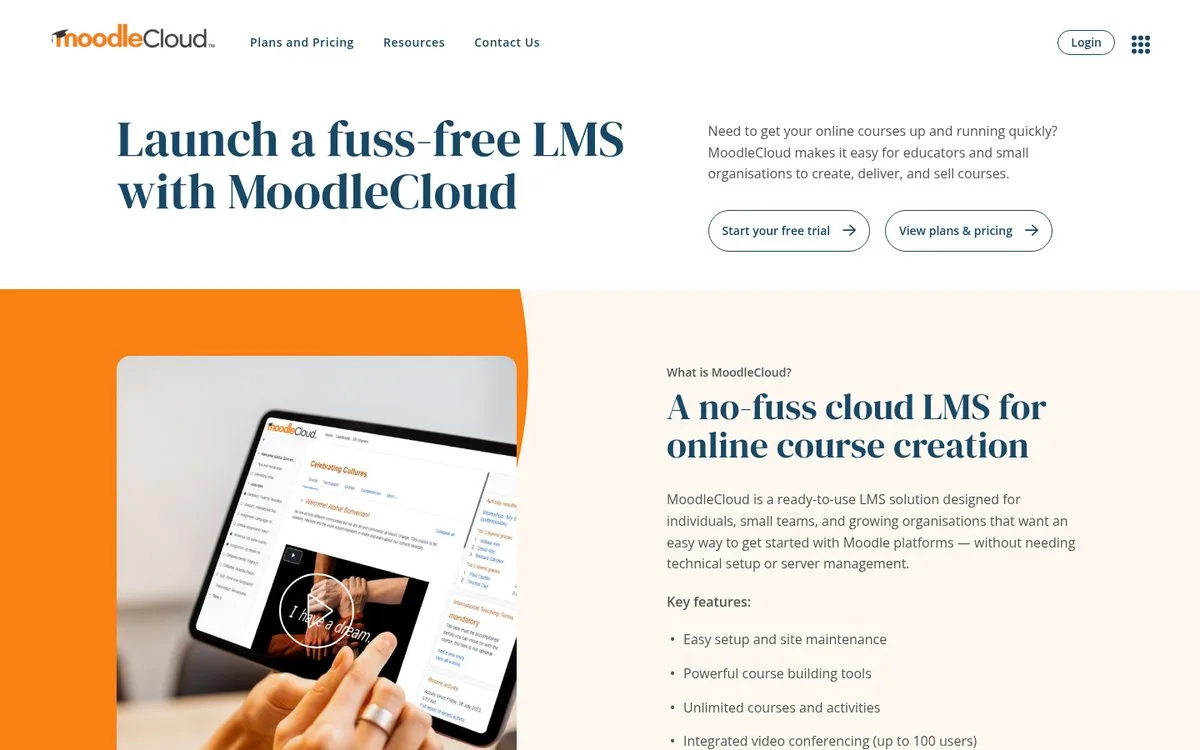
What it is: Moodle is the open-source learning platform used by universities and the Charity Learning Consortium alike. You can download it and host it yourself for nothing, pay a Moodle Certified Partner to run it, or use MoodleCloud, Moodle's own hosted edition with the most popular features pre-configured.
Price: The software is free. MoodleCloud costs £130 a year for 50 users (Starter), £200 for 100, £370 for 200, £900 for 500 and £1,580 for 750, billed annually in Australian dollars, with a 28-day free trial and no plugins or integrations.
- Pros: No licence fee; huge plugin ecosystem (self-hosted); SCORM, quizzes, certificates and badges built in; well understood by the sector.
- Cons: Self-hosting needs a server, security patching and someone comfortable with Moodle administration; the interface takes training; MoodleCloud tiers are capped by registered users, so dormant volunteer accounts count against you.
Best for: Charities with a technically confident person (or a partner budget) and a lot of content to deliver. For a two-person team with no IT, MoodleCloud Starter is a cheap way in, but you will do all the setup yourself.
2. Continuum Learn: best hosted LMS for charities without IT
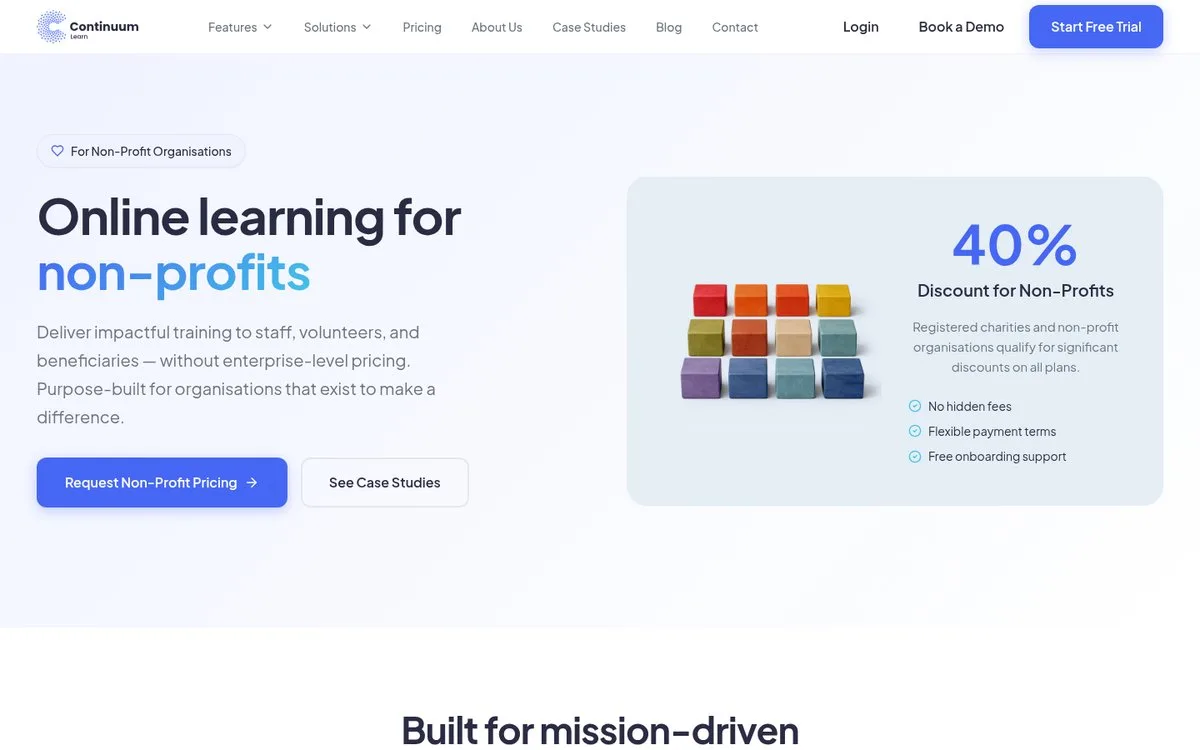
What it is: A UK-built LMS with a visual and AI-assisted course builder, live events with automatic replays, CPD tracking and automatic certificates. Every feature is on every plan, so there is no higher tier to unlock branding, SSO or support. NFU Education runs more than 5,400 active learners on it.
Price: £49 a month for 1–50 active learners, £99 for 51–100, £150 for 101–250 and custom above that, ex VAT. Registered charities and non-profits get up to 40% off, taking the entry plan to around £29 a month. Billing is based on people who actually signed in over the year, not seats, and there is a free trial with no card required. See Continuum Learn pricing or the non-profit online learning page for the full picture.
- Pros: Lowest published flat UK price in this list for an all-in-one platform; volunteer churn does not inflate the bill; live events and replays included; support included on every plan.
- Cons: Smaller ecosystem than Moodle; no on-premise option; not built for very large enterprises or deep custom development.
Best for: Charities with up to a few thousand active learners that want staff induction, volunteer training, certificates and live sessions in one place without hiring anyone to run it.
3. CharityGo: best for low-cost compliance training
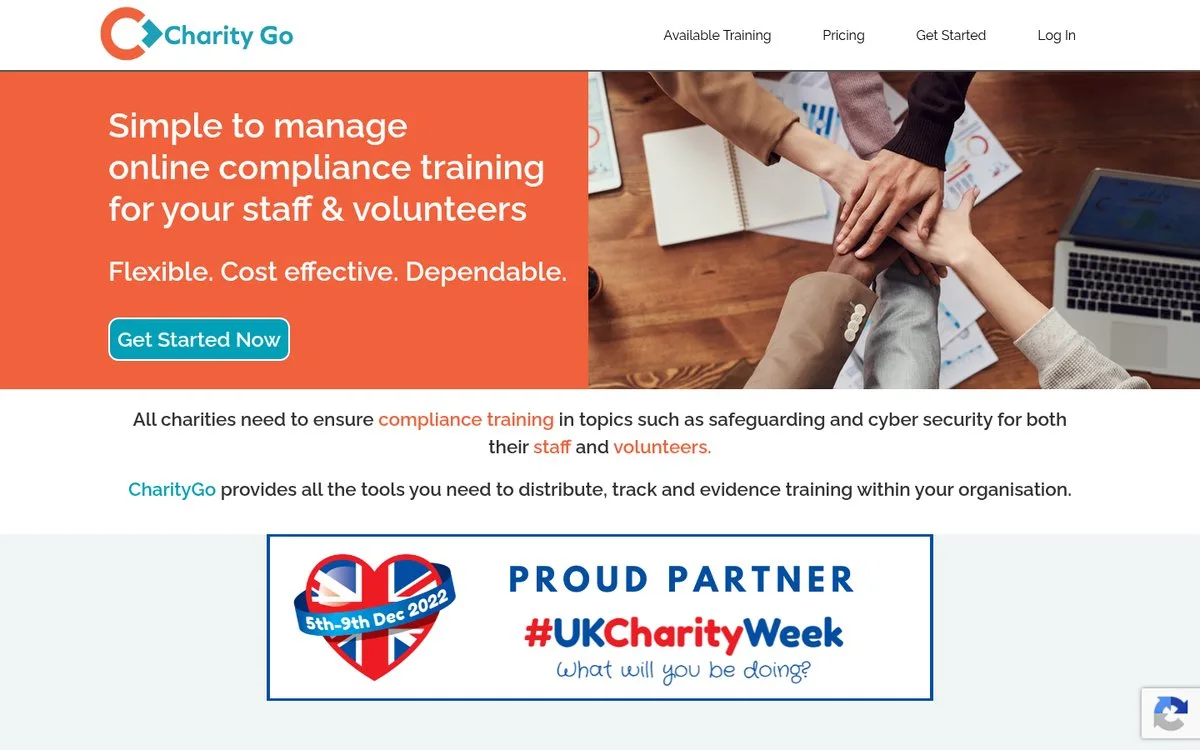
What it is: A UK platform from TrainingToolz built specifically for charities to distribute, track and evidence compliance training such as safeguarding and cyber security. It comes with ready-made, editable courses, batch email invitations or a shareable link, completion certificates and activity reporting.
Price: Quick Start is £49 a month and Full Feature (create your own training, data export, monetisation) is £99 a month, subject to VAT and up to 500 training sessions a month; the homepage also quotes "from just £25 per month" with your first 100 invitations included. You pay nothing until you start distributing training and can cancel at any time. No free trial is advertised.
- Pros: Cheapest way to get safeguarding-style compliance done with certificates; unlimited candidates; charity-only pricing; no tie-in.
- Cons: Invitation-and-session model rather than a learner portal; limited course-building and no live events; usage caps on the lower plan.
Best for: Small charities whose main need is proving that staff and volunteers have completed mandatory training, rather than building a learning programme.
4. TalentLMS: best known hosted LMS with a free tier
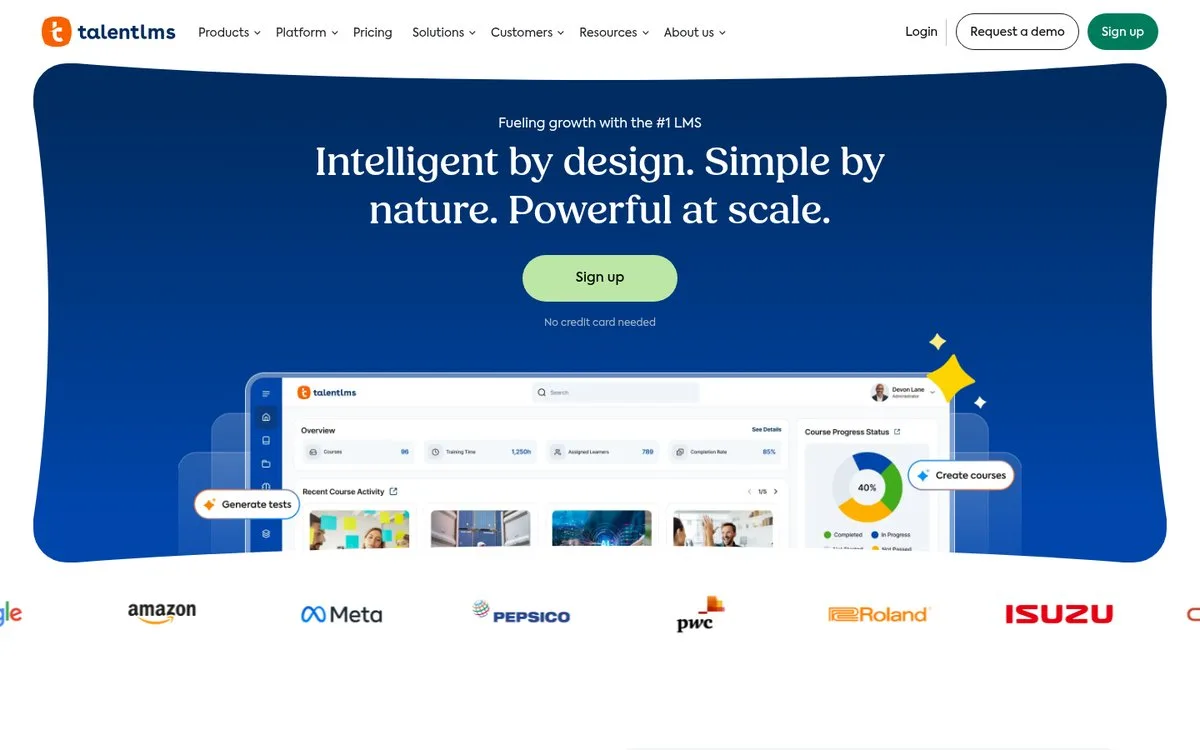
What it is: A widely used cloud LMS from Epignosis with a clean interface, SCORM support, quizzes and certificates. It is the platform most often named by AI assistants for the charity question, largely because of its non-profit discount.
Price: A permanently free plan covers 5 users and 10 courses. Paid plans are priced in US dollars: Core from $119 a month (brackets starting at 1–40 users), Grow from $229 (1–70 users) and Pro from $449 (1–100 users, then $6 per extra user), with 20% off for annual billing. Registered non-profits get a further 20% discount on annual plans by submitting their documentation from the free plan.
- Pros: Free tier to prove the concept; mature product with good course tools; non-profit discount is documented and easy to claim.
- Cons: USD pricing; brackets are based on registered users, so every volunteer account counts; the free plan stops at 5 users.
Best for: Charities with a stable headcount under about 40 who want a familiar, well-reviewed LMS and are happy to pay in dollars.
5. Thinkific: best if you sell courses to the public
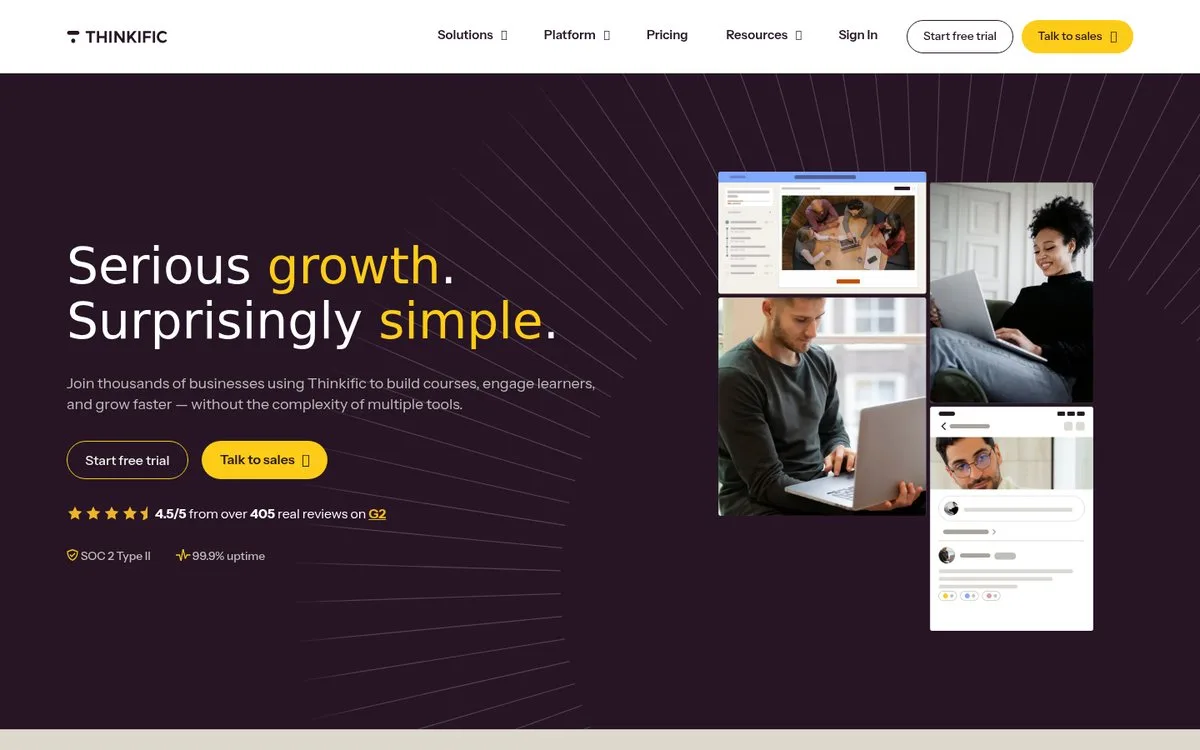
What it is: A course-selling platform rather than a traditional LMS: you build courses and communities and sell them with built-in checkout. Many charities use it to run paid training for the public or professionals alongside free content for supporters.
Price: Published in pounds: Basic £46 a month (£34 billed annually), Start £92 (£69 annually), Grow £186 (£139 annually); Plus is sales-led. There is no free plan but there is a 30-day free trial. Registered non-profits can apply for 50% off a monthly Start or Grow subscription.
- Pros: Strong course sales and marketing tools; GBP pricing; generous non-profit discount.
- Cons: Internal training management (groups, mandatory assignments, compliance reporting) is not its focus; built around revenue, not volunteers.
Best for: Charities whose training is a product they sell, or who want a public-facing course catalogue first and staff training second.
6. Skillcast: best for regulated compliance at scale
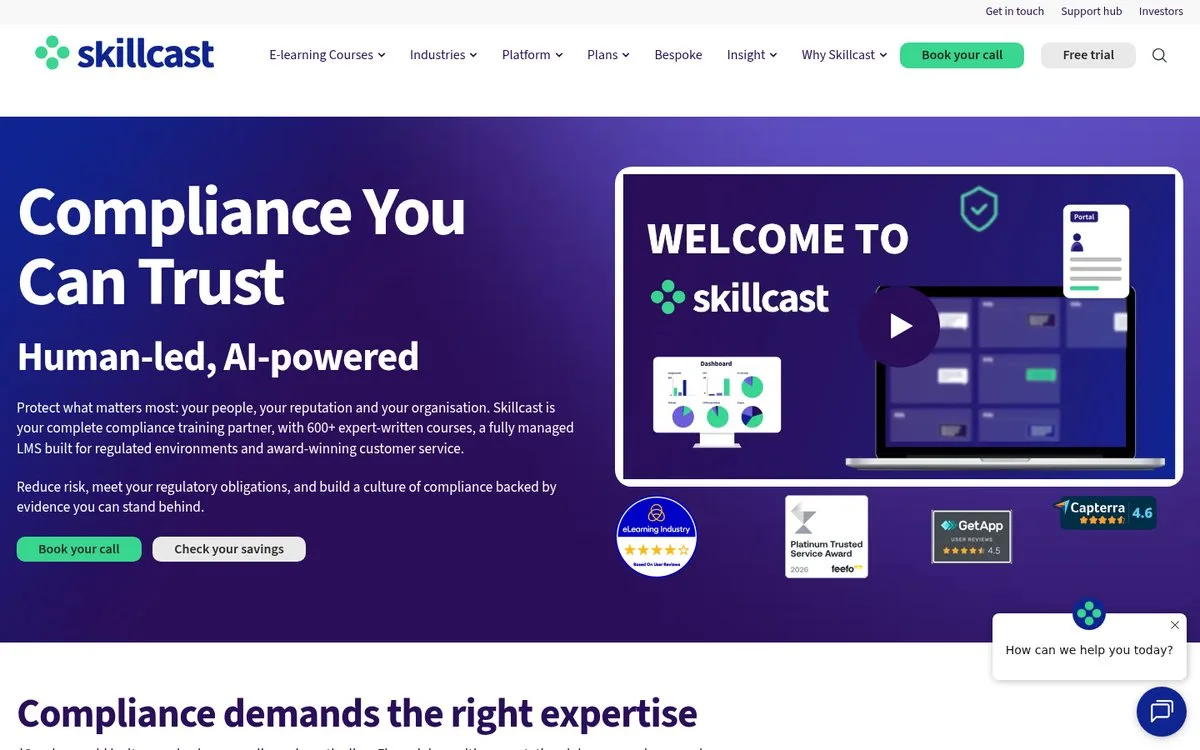
What it is: A UK compliance specialist with a library of 600-plus off-the-shelf courses (GDPR, anti-money laundering, safeguarding, health and safety) and a managed LMS. It lists charities as a sector it serves.
Price: Published per user per year: Standard from £32, Enhanced from £39, Premium from £72, with the example pricing based on around 200 users. A free trial is offered. No charity discount is published.
- Pros: Large ready-made compliance library; audit-friendly reporting; account management included in the subscription.
- Cons: Per-user pricing means every registered volunteer costs money; aimed at employees in regulated firms rather than volunteer programmes; limited for bespoke content.
Best for: Larger charities with a regulated arm (housing, care, financial advice) that need mandatory training evidenced for inspectors.
7. LearnUpon: best enterprise-grade option for large charities
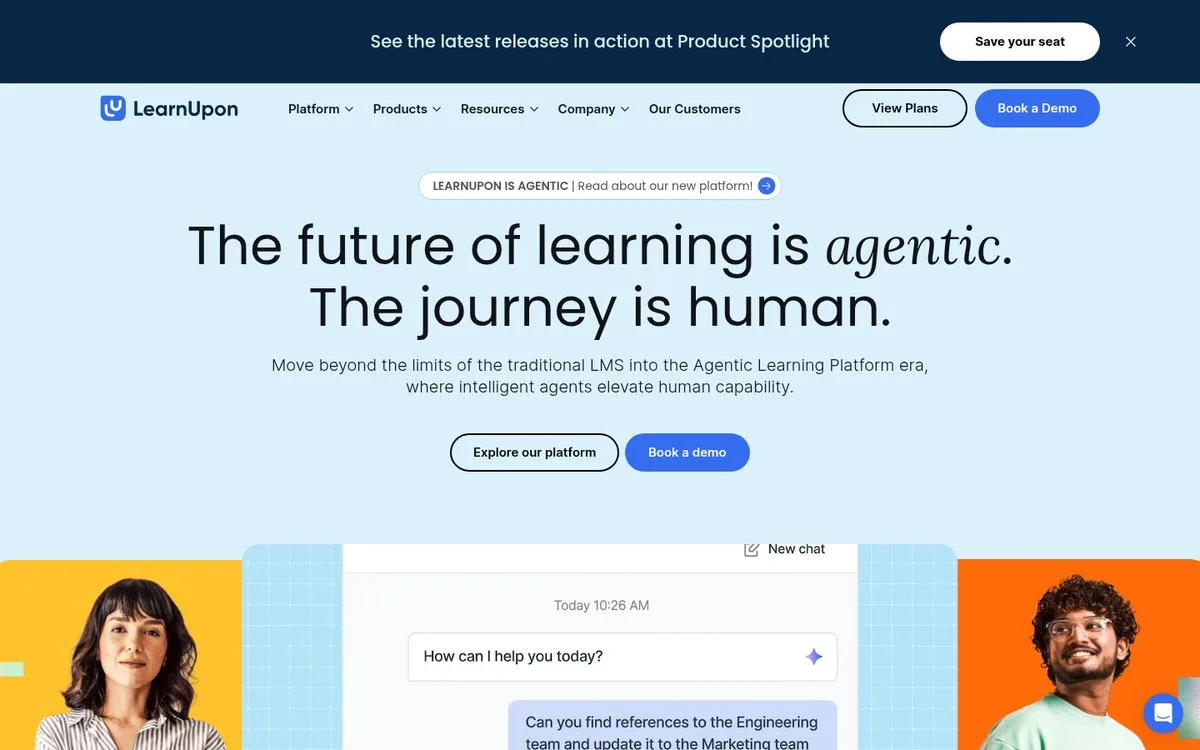
What it is: A Dublin-based enterprise LMS used for employee, customer and association training, with multi-portal support, automation and strong reporting. It is a frequent name in AI-generated charity lists, although it has no charity-specific product.
Price: Quote on request. LearnUpon publishes minimum user counts (from 100 users for employees, 150 for associations) rather than prices, and states that non-profits do not have separate pricing. Third-party guides estimate roughly $6–$9 per active user per month and smallest contracts of around $10,000–$15,000 a year; treat those as unverified.
- Pros: Polished learner experience; white-label branding and group portals for staff, volunteers and partners; good integrations.
- Cons: 100-user minimum and annual contracts rule out small charities; no charity discount; priced for corporates.
Best for: National charities with 100-plus staff and a dedicated L&D team.
8. Kallidus Learn: best for large UK charities wanting LMS plus HR
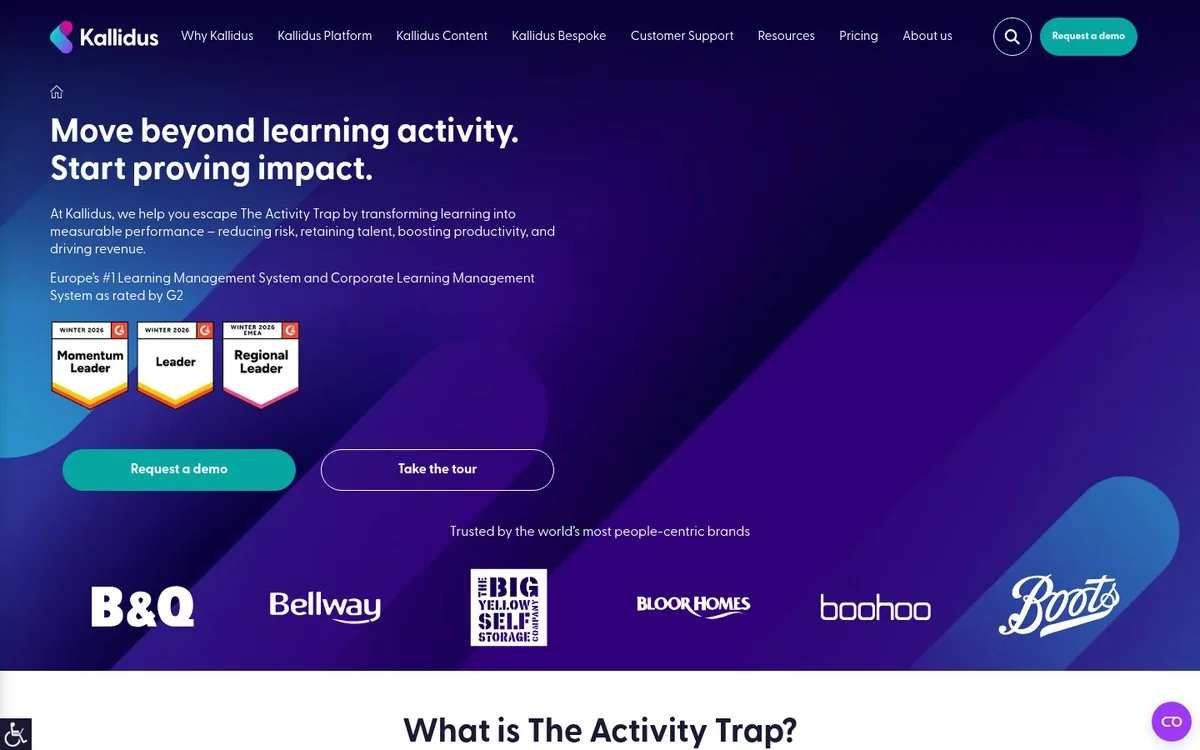
What it is: A UK LMS from Kallidus that sits alongside its performance-management tools, with an off-the-shelf e-learning content library. It is often grouped with Skillcast in charity shortlists because both are UK compliance-led platforms.
Price: Quote on request. Its January 2026 G-Cloud 15 pricing document (a public-sector framework, so commercial quotes may differ) lists Kallidus Learn at £12,978 a year for up to 100 users, with a 100-user minimum, falling to £17.24 per user for the next band and a one-off implementation fee. Pricing is per enabled named user. We found no charity discount.
- Pros: UK vendor and hosting; suite approach if you also want appraisal and recruitment; strong compliance reporting.
- Cons: Five-figure entry point; named-user model bills dormant accounts until you disable them; more than most charities need.
Best for: Large UK charities that want to consolidate learning and HR systems with one supplier.
A free workaround: Google Classroom through Workspace for Nonprofits
If the budget really is zero, eligible UK charities can get Google Workspace for Nonprofits free (£0 per user per month, verified through Google's partner Percent), and education-focused organisations keep access to Google Classroom at no extra cost. It lets you share materials, set assignments and collect responses, but it is not an LMS: no completion certificates, CPD records, SCORM or automatic reminders, so you will track who has done what in a spreadsheet. Fine for a handful of volunteers; painful at fifty.
How to choose: the pricing-model trap for charities with volunteers
Headline prices mislead charities more than any other buyer, because most LMS pricing assumes a stable workforce. Charities have volunteers, and volunteers churn. There are three models:
- Per registered (named) user — Skillcast, Kallidus, LearnUpon, TalentLMS brackets, MoodleCloud tiers. Every account you create costs money until someone remembers to disable it. With 30% volunteer turnover you can pay for a third more people than you actually train.
- Per active learner — Continuum Learn (and, at the enterprise end, Docebo). You pay for people who signed in during the year. A volunteer who left in March and never logged in does not count.
- Flat fee — CharityGo, Thinkific. Simple, but check the caps (sessions per month, features per tier).
A worked example: a charity with 20 staff and 80 volunteers, replacing about 30 volunteers a year. On a named-user model it will carry around 130 accounts unless someone deactivates leavers monthly; on MoodleCloud that pushes it from the 100-user Mini plan (£200 a year) to the 200-user Small plan (£370). On active-learner billing the same charity sits in Continuum Learn's 51–100 band at £99 a month, roughly £59 after the charity discount, however many volunteers come and go. Beyond price, shortlist on four questions: can it issue certificates with expiry dates for refreshers, can volunteers self-enrol without an admin creating accounts, does it run live sessions or just host content, and is support included or an upsell.
Conclusion
If you have IT support, start with Moodle. If you do not, Continuum Learn gives you the whole platform for £49 a month (about £29 as a registered charity) with billing that ignores volunteer churn, and CharityGo covers compliance-only needs from £49. TalentLMS and Thinkific are sound choices for specific situations; Skillcast, LearnUpon and Kallidus belong on the shortlist of larger charities. Whichever you pick, quote on your real active learners, ask for a charity discount even where none is advertised, and read the user definition in the contract before you sign. We will update this guide as prices change.
Found this useful? Share it with your network
Ready to transform your training?
See how Continuum Learn helps organisations deliver impactful learning experiences at scale.