
Governance & ethics

Raffles, Lotteries and Prize Draws

How to run raffles, tombolas, 100 clubs, lotteries and prize draws lawfully: event raffles, selling tickets in advance or online, Northern Ireland's different rules, free draws, and when to stop and ask. For volunteers, PTAs, clubs and charity fundraisers across the UK.

  • 25 min
  • 5 lessons
  • English
  • United Kingdom
  • Last reviewed 22 November 2026

Covers: UK: Gambling Act 2005 lotteries in England, Wales and Scotland (Gambling Commission; councils, or licensing boards in Scotland) and the Betting, Gaming, Lotteries and Amusements (Northern Ireland) Order 1985 as amended in 2022 (Department for Communities; district councils)

What you will learn

  • Is it a lottery?

    Tell a lottery from a free draw or a skill competition, and know which kind of lottery you are running.

  • Raffles at events

    Run a raffle at an event lawfully in England, Wales and Scotland: sold on the day, within the £500 and £100 limits.

  • Selling in advance or online

    Know what changes when you sell before the day or online: registration, one price, 16 and over, ticket details, 20% to the cause and the return.

  • Northern Ireland

    Know how Northern Ireland's rules for event raffles and society lotteries differ from Great Britain's.

  • When to stop and ask

    Spot red flags, such as online sales, children selling, big prizes and hidden free routes, and stop to ask before anything is sold.

How this course was checked

  • More than 220 statements traced to 9 sources
  • Checked twice, independently, before publication. Every correction was checked again.
  • Last reviewed 22 November 2026. Next review due 22 November 2027.

What changed

  • 1 First published.
Spotted something wrong or out of date? Report an error

Report an error

Tell us what looks wrong or out of date in Raffles, Lotteries and Prize Draws, and where. We check every report against the sources and correct the course if needed.

Lessons

1 module, 5 lessons

  1. Raffles, lotteries and prize draws

    • Is it a lottery? What makes something a lottery, and the main kinds you can run.
    • The raffle at your event (England, Wales and Scotland) Selling on the day, the £500 and £100 limits, prices and children.
    • Selling before the day or online (England, Wales and Scotland) Small society lotteries: registering, the limits, online sales and checking a ticket.
    • Northern Ireland, free draws, and when to stop Northern Ireland's rules, free draws and competitions, and when to ask first.
    • Check your understanding Eight questions on the whole course. You need 80% to pass.

Try the first lesson

This is the first lesson exactly as your learners will see it. The rest of the course opens in your own portal.

Lesson 1: Is it a lottery?
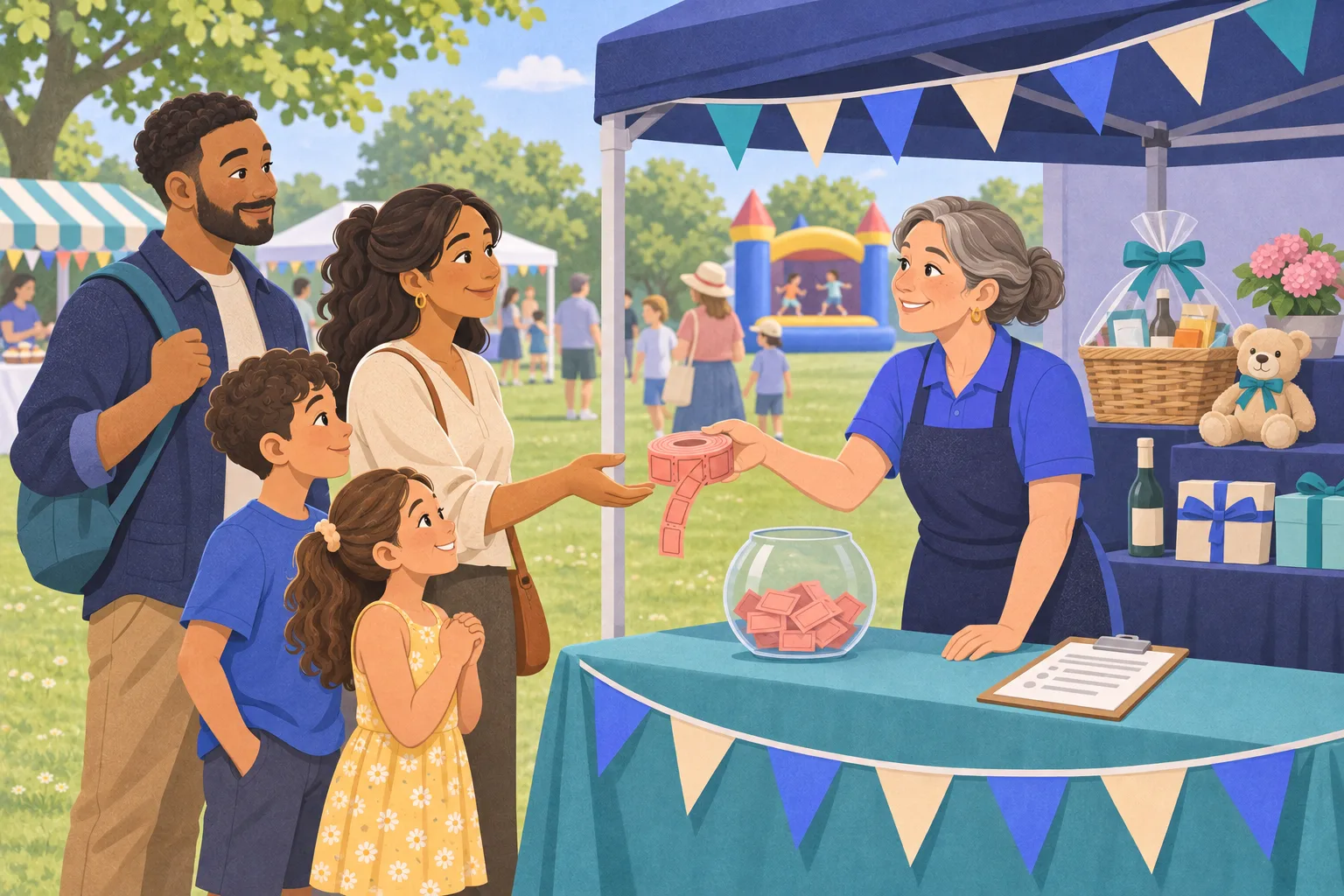
At a sunny community summer fair, a volunteer at a stall offers a roll of raffle tickets to a smiling family, with a table of donated prizes behind her

Run raffles, 100 clubs and prize draws the right way.

Is it a lottery?

Raffles, tombolas and sweepstakes raise money for good causes all over the UK. In law they are lotteries, and the kind of lottery you run decides the rules you follow.

In a church hall, two volunteers arrange donated raffle prizes on a table: a hamper, a bottle, a potted plant and a boxed cake.

Awareness only. This course is awareness training, not legal advice. It has not been reviewed by a professional body, and it doesn't replace your organisation's own procedures. If you're unsure, ask [Your organisation: who to ask about raffles and lotteries], or check with your council or licensing board, the Gambling Commission or, in Northern Ireland, the Department for Communities.

Pay, prize, chance

In England, Wales and Scotland, an arrangement is a lottery if people pay to take part, there is a prize, and the prizes are allocated wholly by chance. Calling it something else changes nothing. Northern Ireland's law has no written definition: the test comes from court judgments, and nothing is a lottery unless people must pay to take part. In England, Wales and Scotland, the profits must go to the purpose you stated on your tickets or adverts.

If people pay to take part and prizes are allocated wholly by chance, it's a lottery, whatever you call it.

When, where and to whom

To work out which kind you're running, ask when, where and to whom you'll sell. In England, Wales and Scotland: on the day, at the event, it's an event raffle. Only to members or people on the club's premises, or to people who work or live in one place: a private lottery. To the public, before the day or online: a registered small society lottery. Lessons 2 and 3 cover Great Britain; lesson 4 covers Northern Ireland, which has its own law.

Raffle at an event

Private, work or residents' lottery

Small society lottery

Gambling Commission licence (Great Britain)

In England, Wales or Scotland, is each one a lottery, or not?

0 of 9 sorted

Sources: Gambling Act 2005, sections 14, 19, 260 and 261, Schedules 2 and 11; Gambling Commission, "How to run a lottery or fundraiser" (updated 12 July 2022) and "Lotteries and the Gambling Act 2005" (11 October 2021); Betting, Gaming, Lotteries and Amusements (Northern Ireland) Order 1985, article 131; Department for Communities, "The law on lotteries in Northern Ireland" (February 2023).

These are awareness courses. They are not legal advice, they are not accredited and they have not been reviewed by a professional body. They don't replace practical training or your organisation's own risk assessment and policies.

Sources

About this course

Length
25 min
Lessons
5
Language
English
Law covered
UK: Gambling Act 2005 lotteries in England, Wales and Scotland (Gambling Commission; councils, or licensing boards in Scotland) and the Betting, Gaming, Lotteries and Amusements (Northern Ireland) Order 1985 as amended in 2022 (Department for Communities; district councils)
Last reviewed
22 November 2026
Next review
22 November 2027
Version
1

Common questions

Is this course really free?

Yes. Start a free 14-day trial and the course is in your portal straight away, branded to you, with no card needed. Every paid plan includes it at no extra cost.

Can I add this course to my own LMS?

Yes. Export it as a SCORM 1.2 or SCORM 2004 package and upload it to any LMS that supports SCORM. A free trial includes one SCORM export.

Can I add our own policies and contacts?

Yes. The course marks where to add your organisation's details, and the copy in your portal is yours to edit.

Is this course accredited?

No. It is awareness training. It is not accredited or CPD-certified and has not been reviewed by a professional body.

More free courses

Governance & ethics

Anti-Bribery and Corruption

Anti-bribery awareness for staff in sales, buying, partnerships and fundraising: the four offences under the Bribery Act 2010, why an offer is enough, gifts and hospitality (no legal £ limit), facilitation payments, red flags with agents, and how to report a concern. Covers the whole UK.

20 min · 4 lessons · United Kingdom

Reviewed 21 November 2026

Governance & ethics

Fraud Awareness for Charities

Fraud awareness for charity staff, volunteers and trustees: how charities are defrauded, why trusted people still need checks, red flags such as changed bank details, and what to do if you suspect fraud. Covers the whole UK.

30 min · 5 lessons · United Kingdom

Reviewed 22 November 2026

Governance & ethics

Fundraising the Right Way

For volunteer and staff fundraisers: being open, honest and respectful, taking no for an answer, donors who may not be able to decide, handling cash and supporter details, and where complaints go.

30 min · 5 lessons · United Kingdom

Reviewed 22 November 2026

Give your team a portal with these courses already in it

Start a free 14-day trial, choose your courses and invite your learners in minutes.