People & HR

Equality, Diversity and Inclusion

A free awareness course for everyone at work in Great Britain: the nine protected characteristics, direct and indirect discrimination, harassment and victimisation, reasonable adjustments and positive action, and what you and your employer must do, including the duties in force since 30 October 2026. Northern Ireland differences noted.

  • 25 min
  • 5 lessons
  • English
  • United Kingdom
  • Last reviewed 21 November 2026

Covers: Great Britain (Equality Act 2010 as amended to 30 October 2026); Northern Ireland differences noted (separate equality laws)

What you will learn

  • The nine protected characteristics

    Name the nine protected characteristics by their legal names, and say where the Equality Act 2010 applies and how Northern Ireland differs.

  • Unlawful conduct

    Recognise direct and indirect discrimination, harassment and victimisation, and why calling something banter is no defence.

  • Reasonable adjustments

    Explain what reasonable adjustments are and who pays for them, and how positive action differs from positive discrimination.

  • Who is responsible

    Describe what your employer is liable for, its all reasonable steps defence, the changes in force since 30 October 2026, and your own liability.

  • Inclusion and speaking up

    Check your own decisions, respond safely to an offensive remark, and report what you see or experience, knowing you are protected from victimisation.

How this course was checked

  • More than 220 statements traced to 7 sources
  • Checked twice, independently, before publication. Every correction was checked again.
  • Last reviewed 21 November 2026. Next review due 21 November 2027.

What changed

  • 1 First published.
Spotted something wrong or out of date? Report an error

Report an error

Tell us what looks wrong or out of date in Equality, Diversity and Inclusion, and where. We check every report against the sources and correct the course if needed.

Lessons

1 module, 5 lessons

  1. Equality, diversity and inclusion

    • Equality law in a nutshell The nine protected characteristics by their legal names, what "sex" means in the Act, as the Supreme Court ruled in April 2025, and how Northern Ireland differs.
    • Four kinds of unlawful conduct Direct and indirect discrimination, harassment and victimisation, with sorting practice on examples from the EHRC's Employment Code.
    • Reasonable adjustments and inclusion The duty to make reasonable adjustments, positive action and its limits, and a scenario on a remark in a team meeting.
    • Responsibilities and speaking up What your employer and you are each liable for, the changes in force since 30 October 2026, everyday inclusion, and what to do if you see or experience discrimination or harassment.
    • Check your understanding Eight questions on the whole course. You need 80% to pass.

Try the first lesson

This is the first lesson exactly as your learners will see it. The rest of the course opens in your own portal.

Lesson 1: Equality law in a nutshell
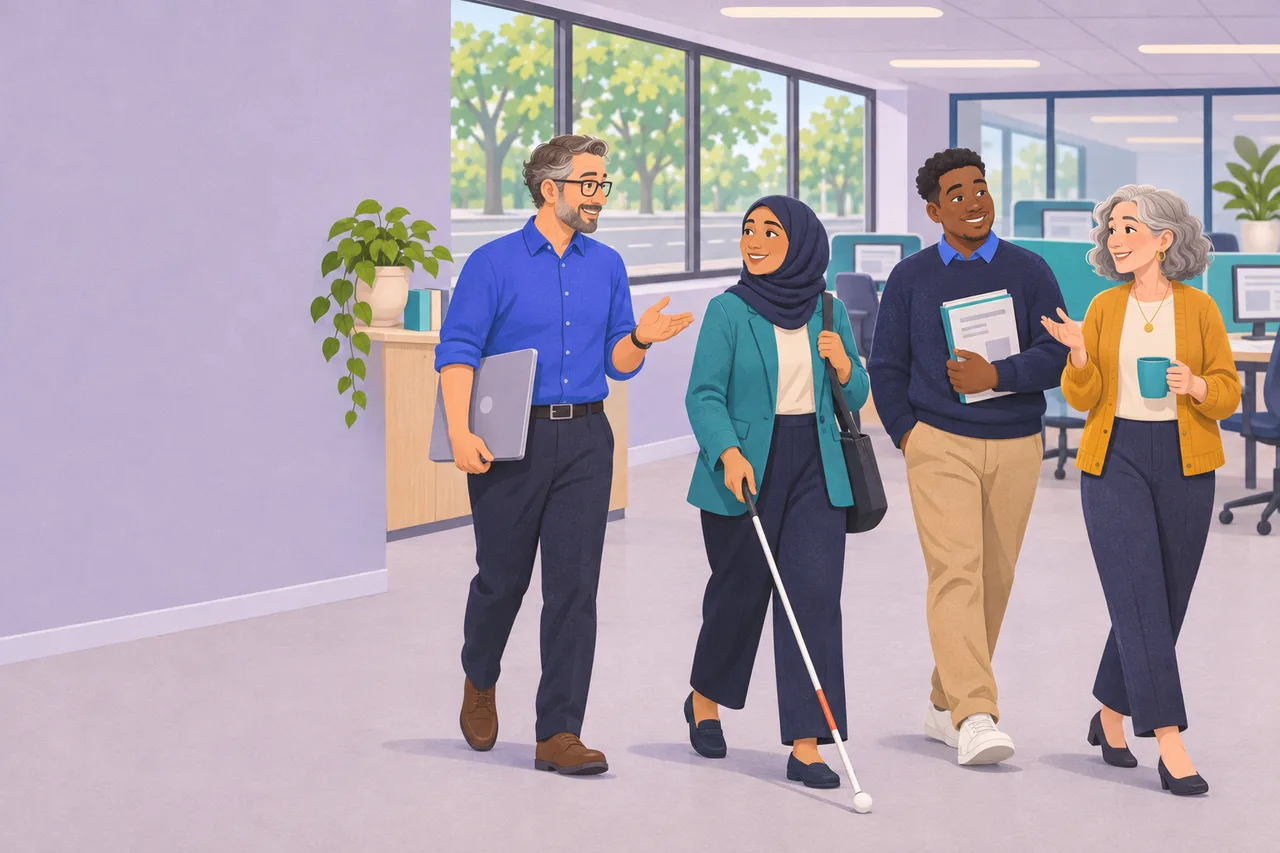
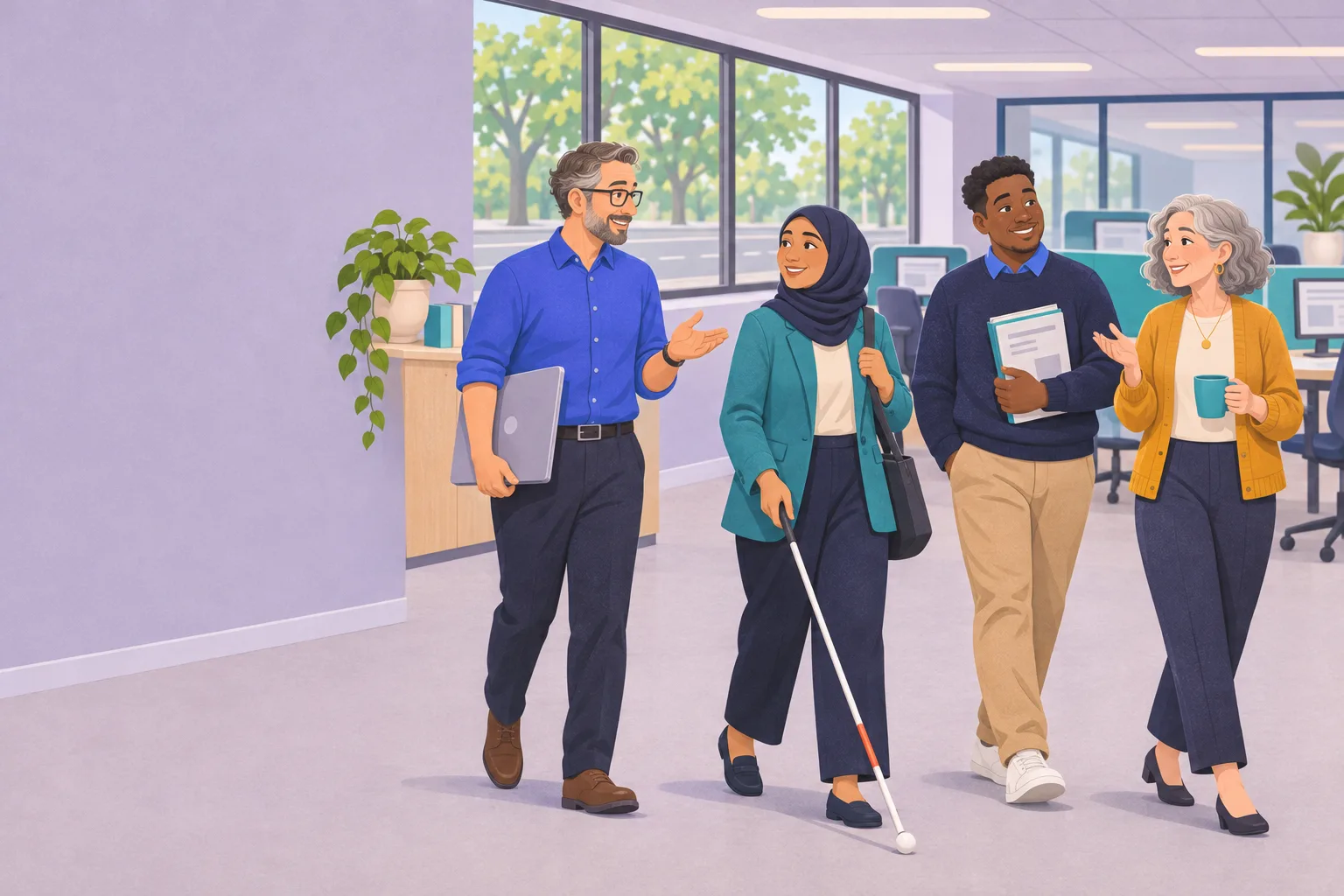
Colleagues of different ages and backgrounds walk and talk together through a bright office, one of them with a white cane

Equality, diversity and inclusion: fair treatment for everyone at work

Equality law in a nutshell

Being turned down for a job, mocked or left out because of your age, race, religion or another protected characteristic can be unlawful. In England, Wales and Scotland, the law that says so is the Equality Act 2010.

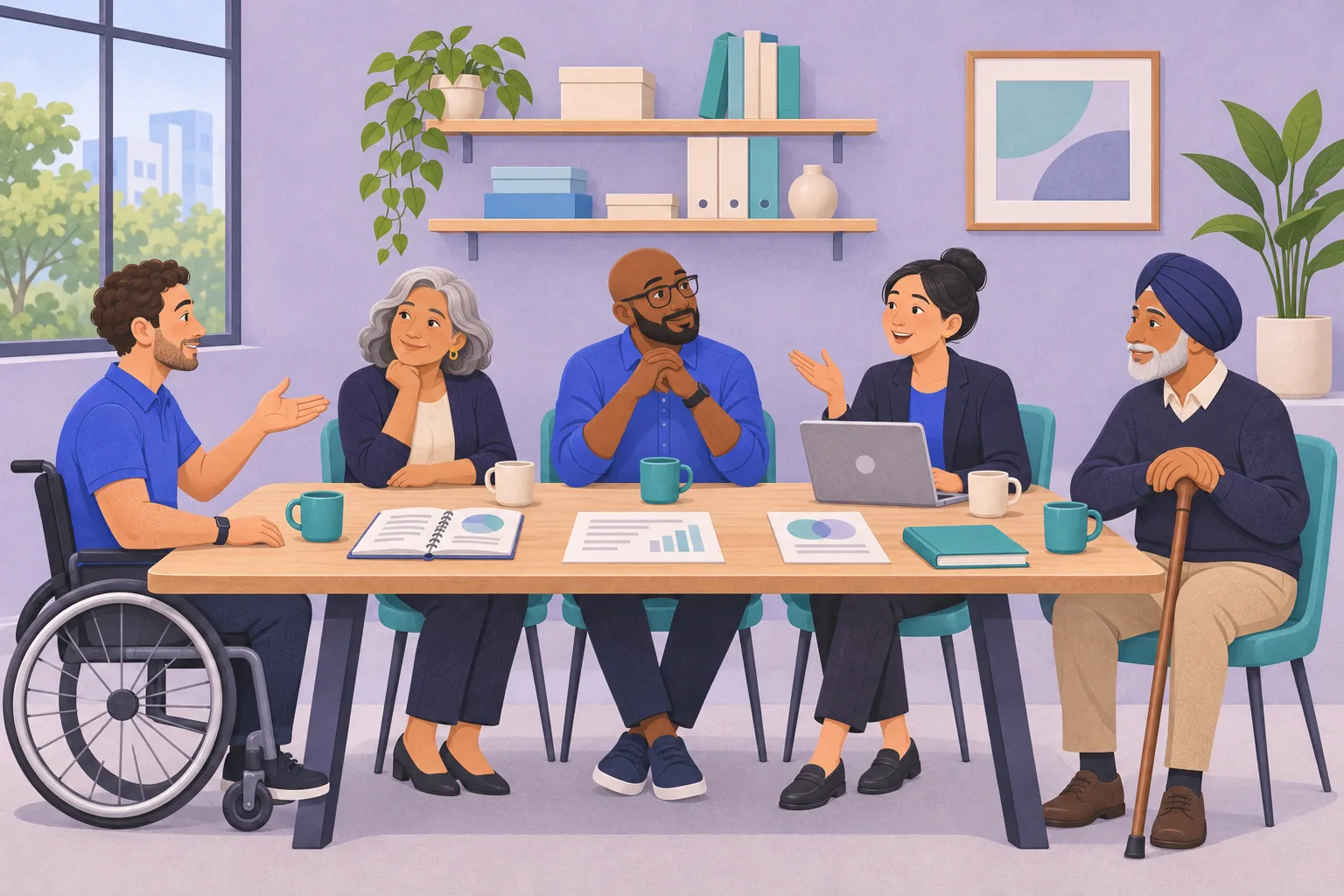
Five colleagues at a meeting table: three sit behind it facing us, a person in a manual wheelchair is at the left end and a person with a walking stick at the right end, with mugs on the table

Awareness only. This course is awareness, not a qualification, and it isn't legal advice. It has not been reviewed by a professional body. Follow your organisation's equality policy: [Your organisation: your equality policy]

Nine protected characteristics

The Act protects people because of nine protected characteristics. These are their legal names:

Protected characteristicWhat it covers
AgeA particular age or a range of ages, young or old
DisabilityA physical or mental impairment with a substantial (more than minor or trivial) and long-term adverse effect on normal day-to-day activities
Gender reassignmentProposing to undergo, undergoing or having undergone a process, or part of a process, to reassign sex
Marriage and civil partnershipBeing married or in a civil partnership
Pregnancy and maternityProtection from unfavourable treatment because of pregnancy, a pregnancy-related illness, or maternity leave
RaceIncludes colour, nationality, and ethnic or national origins
Religion or beliefAny religion, or religious or philosophical belief, including having none
SexBeing a man or a woman (see below)
Sexual orientationOrientation towards people of the same sex, the opposite sex, or either sex

Cancer, HIV infection and multiple sclerosis each count as a disability under the Act.

What "sex" means in the Act

On 16 April 2025 the Supreme Court ruled unanimously that "sex", "man" and "woman" in the Equality Act mean biological sex, including for someone with a gender recognition certificate.

Trans people are still protected. Gender reassignment remains a protected characteristic, and the court said trans people can still rely on the Act's rules on direct discrimination, harassment and indirect discrimination.

Facilities and dress at work: [Your organisation: facilities and dress policy]

Common myths

Menopause is a protected characteristic.
Menopause isn't a protected characteristic in itself, but treatment linked to it can be discrimination related to age, disability, gender reassignment or sex.
Political opinion is a protected characteristic.
Political opinion isn't one of the nine, though a political belief can sometimes count as a philosophical belief. Northern Ireland protects it under separate law.
Marriage and civil partnership protects single people too.
Marriage and civil partnership covers people who are married or in a civil partnership, not people who are single, engaged or living together.
Only people who are disabled now are protected.
A past disability counts: someone who has had a disability is protected too, not only someone who has one now.

Northern Ireland. The Equality Act 2010 is the law in England, Wales and Scotland. Northern Ireland has its own equality laws and its own Equality Commission. They differ in detail: political opinion is protected there, and the new Great Britain duties in Lesson 4 don't apply. [Your organisation: NI policy contact]

Sources: Equality Act 2010, sections 4 to 12, 18, 212 and 217, and Schedule 1 (legislation.gov.uk, revised text, read 21 November 2026); Supreme Court, For Women Scotland Ltd v The Scottish Ministers, judgment of 16 April 2025, paragraph 265; Acas, Menopause and discrimination (updated 7 April 2026) and Religion or belief discrimination (updated 29 October 2024); Fair Employment and Treatment (Northern Ireland) Order 1998, article 3; Northern Ireland Act 1998, section 73.

These are awareness courses. They are not legal advice, they are not accredited and they have not been reviewed by a professional body. They don't replace practical training or your organisation's own risk assessment and policies.

Sources

About this course

Length
25 min
Lessons
5
Language
English
Law covered
Great Britain (Equality Act 2010 as amended to 30 October 2026); Northern Ireland differences noted (separate equality laws)
Last reviewed
21 November 2026
Next review
21 November 2027
Version
1

Common questions

Is this course really free?

Yes. Start a free 14-day trial and the course is in your portal straight away, branded to you, with no card needed. Every paid plan includes it at no extra cost.

Can I add this course to my own LMS?

Yes. Export it as a SCORM 1.2 or SCORM 2004 package and upload it to any LMS that supports SCORM. A free trial includes one SCORM export.

Can I add our own policies and contacts?

Yes. The course marks where to add your organisation's details, and the copy in your portal is yours to edit.

Is this course accredited?

No. It is awareness training. It is not accredited or CPD-certified and has not been reviewed by a professional body.

More free courses

People & HR

Managing Volunteers Well

Volunteer management essentials for coordinators and managers: keeping a volunteer a volunteer, expenses, criminal record checks across the UK, looking after volunteers, and handling problems fairly.

25 min · 5 lessons · United Kingdom

Reviewed 22 November 2026

People & HR

Preventing Sexual Harassment at Work

What sexual harassment is under the Equality Act 2010, what employers in Great Britain must now do to prevent it, including harassment by customers and other third parties since 30 October 2026, how to help safely if you see it, how to report it and how the law protects you, with notes for Northern Ireland.

25 min · 5 lessons · United Kingdom

Reviewed 21 November 2026

People & HR

Safeguarding Awareness

Free safeguarding awareness for staff and volunteers in UK charities and membership bodies. Covers children and adults at risk in England, Wales, Scotland and Northern Ireland: the main kinds of abuse and neglect, how to respond if someone tells you, sharing concerns safely, and raising a concern about a colleague.

30 min · 5 lessons · United Kingdom

Reviewed 21 November 2026

Give your team a portal with these courses already in it

Start a free 14-day trial, choose your courses and invite your learners in minutes.