People & HR

Safeguarding Awareness

Free safeguarding awareness for staff and volunteers in UK charities and membership bodies. Covers children and adults at risk in England, Wales, Scotland and Northern Ireland: the main kinds of abuse and neglect, how to respond if someone tells you, sharing concerns safely, and raising a concern about a colleague.

  • 30 min
  • 5 lessons
  • English
  • United Kingdom
  • Last reviewed 21 November 2026

Covers: UK, four nations: England (Working Together 2026; Care Act 2014), Wales (Social Services and Well-being (Wales) Act 2014; Wales Safeguarding Procedures), Scotland (National Guidance for Child Protection; Adult Support and Protection (Scotland) Act 2007), Northern Ireland (Co-operating to Safeguard Children; adult safeguarding policy)

What you will learn

  • What safeguarding means

    Explain what safeguarding means, who it covers, and why it is part of everyone's job, paid or volunteer.

  • Recognising abuse and neglect

    Recognise the main kinds of abuse and neglect of children and adults at risk, and know that signs are possible indicators, not proof.

  • If someone tells you

    Respond well to a disclosure: call 999 if anyone is in immediate danger, listen, don't promise secrecy, don't investigate, write down the facts and tell your DSL straight away.

  • Sharing a concern

    Know that data protection law doesn't stop you sharing a safeguarding concern, and what to do when an adult doesn't agree.

  • Concerns about colleagues

    Know how to raise a concern about a colleague or volunteer, and where to turn if a concern isn't acted on.

How this course was checked

  • More than 140 statements traced to 8 sources
  • Checked twice, independently, before publication. Every correction was checked again.
  • Last reviewed 21 November 2026. Next review due 21 November 2027.

What changed

  • 1 First published.
Spotted something wrong or out of date? Report an error

Report an error

Tell us what looks wrong or out of date in Safeguarding Awareness, and where. We check every report against the sources and correct the course if needed.

Lessons

1 module, 5 lessons

  1. Safeguarding awareness

    • What safeguarding means Who safeguarding covers in each UK nation, your part and your DSL's.
    • Recognising abuse and neglect The main kinds of abuse and neglect of children and adults at risk, and possible signs.
    • If someone tells you Six steps for responding to a disclosure, and practice with a scenario at an open day.
    • Sharing concerns and speaking up Data protection and consent, concerns about a colleague, and whistleblowing.
    • Check your understanding Eight questions on the whole course. You need 80% to pass.

Try the first lesson

This is the first lesson exactly as your learners will see it. The rest of the course opens in your own portal.

Lesson 1: What safeguarding means
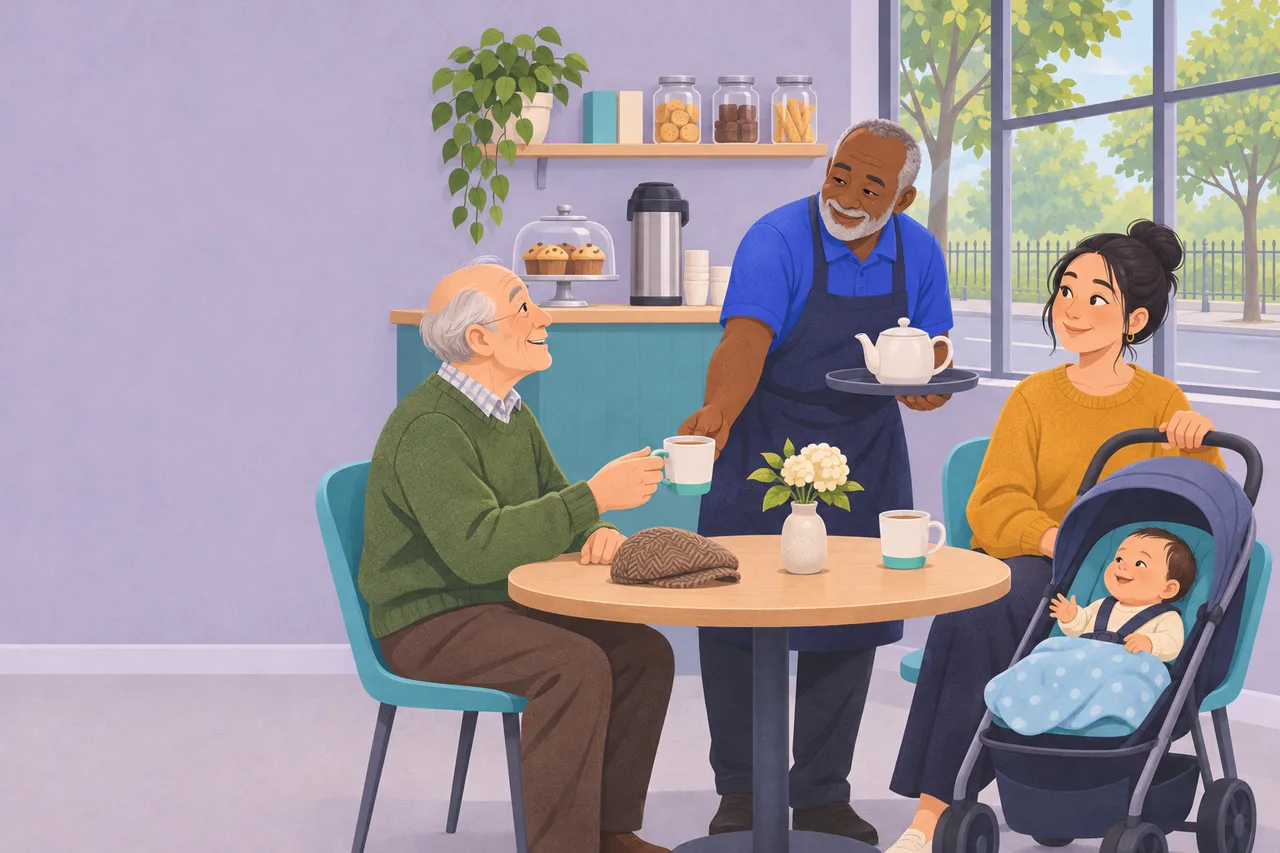
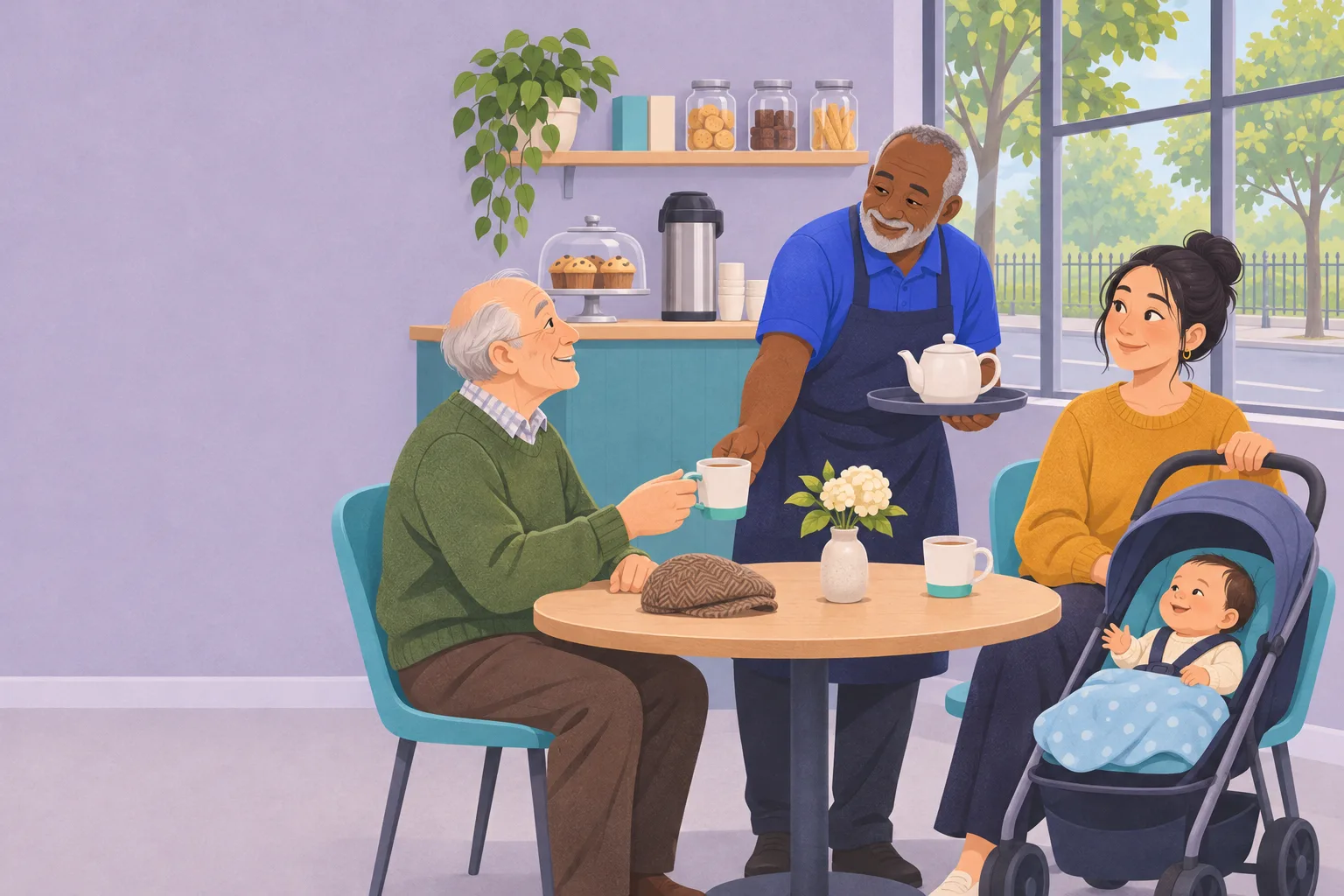
In a community centre café, a volunteer serves tea to an older man and a young mum with a baby in a pushchair, everyone smiling

Safeguarding is everyone's job

What safeguarding means

Safeguarding means protecting children and adults at risk from abuse and neglect. Everyone in your organisation has a part to play, whether they're paid or a volunteer.

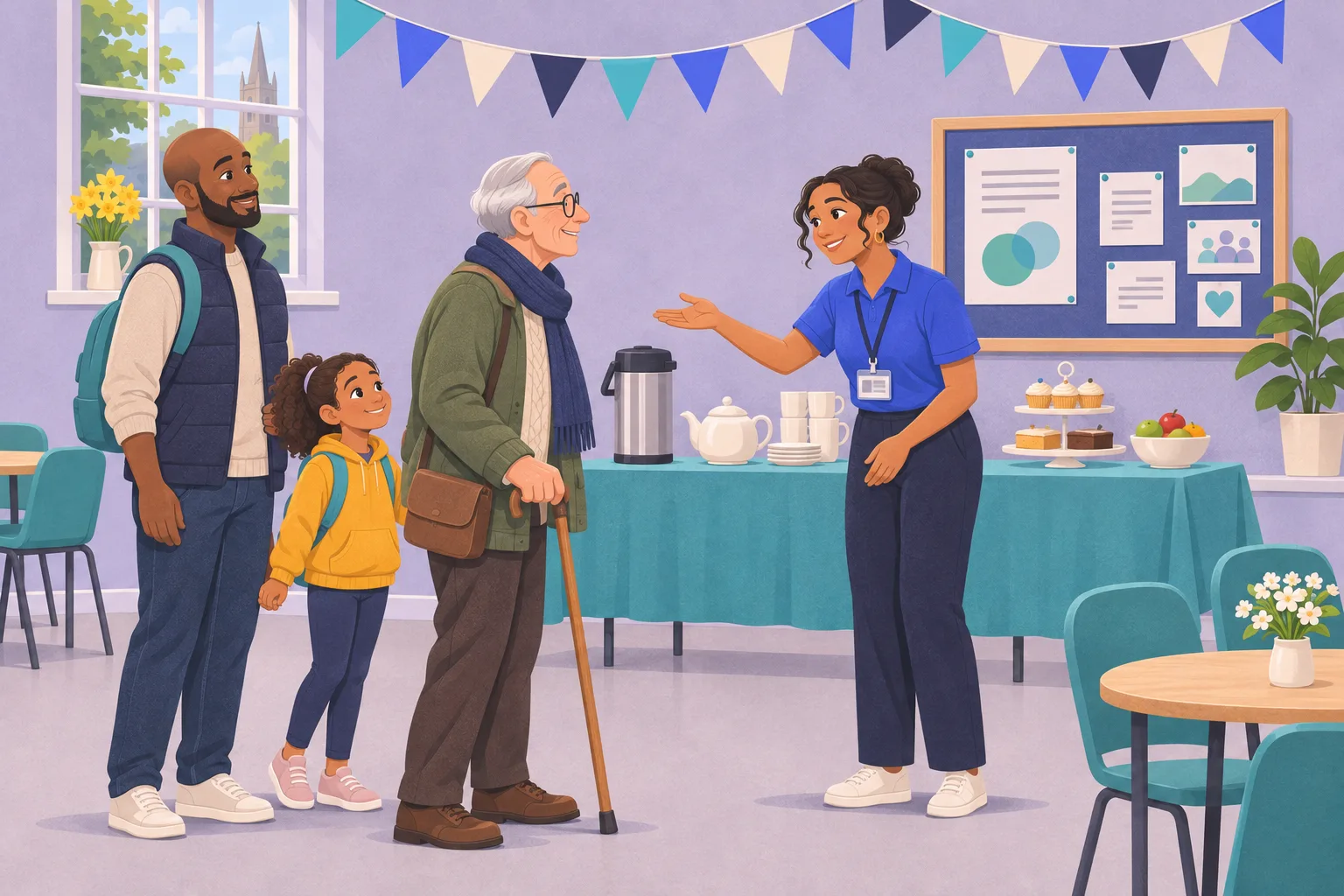
In a community hall hung with bunting, a volunteer with an ID badge greets an older person who uses a walking stick, while a parent and child stand hand in hand nearby; a tea table and a noticeboard are behind them

Before you start. This course talks about abuse and neglect, without graphic detail. If it brings up anything for you, support is available: [Your organisation: support available to you]

Awareness only. This course is awareness training, not a qualification, and it isn't legal advice. It has not been reviewed by a professional body, and it doesn't replace your organisation's safeguarding policy or any further training your role needs.

Who it covers

Safeguarding covers children and adults at risk. The four UK nations define them a little differently.

Children

Adults at risk

Recognise, respond, report, record

The Charity Commission, which regulates charities in England and Wales, asks trustees to make sure everyone involved knows how to recognise, respond to, report and record a safeguarding concern. It's good-practice wording, not a law, and a useful map of this course. Flip each card.

Recognise
Know the main kinds of abuse and neglect, and the possible signs that something is wrong.
Respond
Listen calmly, don't promise to keep it secret, and don't investigate.
Report
Call 999 if anyone is in immediate danger. Otherwise, tell your designated safeguarding lead (DSL) straight away.
Record
Write down what you saw and heard, in the person's own words, with the date and time.

Your part, and your DSL's

You don't have to decide whether abuse has happened, or find out more. Your designated safeguarding lead (DSL) will usually decide, with you, what happens next, such as whether to contact social services or the police. If you think someone needs protecting and the DSL doesn't act, you can contact social services or the police yourself. The Wales Safeguarding Procedures call this role the designated safeguarding person (DSP).

Your DSL is [Your organisation: designated safeguarding lead (DSL) and how to contact them].

The law on reporting

Wherever you are in the UK, tell your DSL straight away. Some people already have a legal duty to report. In Northern Ireland, anyone who knows or believes that a serious crime has been committed, and has information likely to help catch or convict the person responsible, must give it to the police within a reasonable time, unless they have a reasonable excuse. In England and Wales, health professionals and teachers (and, in Wales, registered social care workers) must tell the police if they find that female genital mutilation (FGM) has been carried out on a girl under 18. Your DSL can tell you what applies to you.

England's guidance: staff and volunteers working with children in voluntary, charity, faith and private organisations have the same safeguarding responsibilities.

A new duty in England

A law passed in April 2026 will require adults in regulated activity with children in England, and in some other roles, to tell the police or the local authority if they have reason to suspect child sexual abuse; it isn't in force yet.

Sources: Working Together to Safeguard Children 2026 (England, updated 13 November 2026); Care and support statutory guidance, chapter 14 (England, updated 30 October 2026); Social Services and Well-being (Wales) Act 2014 and the Wales Safeguarding Procedures; Adult Support and Protection (Scotland) Act 2007; National Guidance for Child Protection in Scotland 2021 (updated 2023); Crime and Policing Act 2026, section 85 (not in force); Criminal Law Act (Northern Ireland) 1967, section 5; Female Genital Mutilation Act 2003, section 5B; NSPCC Learning, Recognising and responding to abuse (updated 6 November 2025); Charity Commission safeguarding guidance (updated 8 October 2026).

These are awareness courses. They are not legal advice, they are not accredited and they have not been reviewed by a professional body. They don't replace practical training or your organisation's own risk assessment and policies.

Sources

About this course

Length
30 min
Lessons
5
Language
English
Law covered
UK, four nations: England (Working Together 2026; Care Act 2014), Wales (Social Services and Well-being (Wales) Act 2014; Wales Safeguarding Procedures), Scotland (National Guidance for Child Protection; Adult Support and Protection (Scotland) Act 2007), Northern Ireland (Co-operating to Safeguard Children; adult safeguarding policy)
Last reviewed
21 November 2026
Next review
21 November 2027
Version
1

Common questions

Is this course really free?

Yes. Start a free 14-day trial and the course is in your portal straight away, branded to you, with no card needed. Every paid plan includes it at no extra cost.

Can I add this course to my own LMS?

Yes. Export it as a SCORM 1.2 or SCORM 2004 package and upload it to any LMS that supports SCORM. A free trial includes one SCORM export.

Can I add our own policies and contacts?

Yes. The course marks where to add your organisation's details, and the copy in your portal is yours to edit.

Is this course accredited?

No. It is awareness training. It is not accredited or CPD-certified and has not been reviewed by a professional body.

More free courses

People & HR

Equality, Diversity and Inclusion

A free awareness course for everyone at work in Great Britain: the nine protected characteristics, direct and indirect discrimination, harassment and victimisation, reasonable adjustments and positive action, and what you and your employer must do, including the duties in force since 30 October 2026. Northern Ireland differences noted.

25 min · 5 lessons · United Kingdom

Reviewed 21 November 2026

People & HR

Managing Volunteers Well

Volunteer management essentials for coordinators and managers: keeping a volunteer a volunteer, expenses, criminal record checks across the UK, looking after volunteers, and handling problems fairly.

25 min · 5 lessons · United Kingdom

Reviewed 22 November 2026

People & HR

Preventing Sexual Harassment at Work

What sexual harassment is under the Equality Act 2010, what employers in Great Britain must now do to prevent it, including harassment by customers and other third parties since 30 October 2026, how to help safely if you see it, how to report it and how the law protects you, with notes for Northern Ireland.

25 min · 5 lessons · United Kingdom

Reviewed 21 November 2026

Give your team a portal with these courses already in it

Start a free 14-day trial, choose your courses and invite your learners in minutes.