
People & HR

Preventing Sexual Harassment at Work

What sexual harassment is under the Equality Act 2010, what employers in Great Britain must now do to prevent it, including harassment by customers and other third parties since 30 October 2026, how to help safely if you see it, how to report it and how the law protects you, with notes for Northern Ireland.

  • 25 min
  • 5 lessons
  • English
  • United Kingdom
  • Last reviewed 21 November 2026

Covers: Great Britain (Equality Act 2010 as amended by the Worker Protection Act 2023 and the Employment Rights Act 2025); Northern Ireland differences noted (Sex Discrimination (NI) Order 1976)

What you will learn

  • Recognising sexual harassment

    Recognise sexual harassment and the other forms of harassment the Equality Act covers, and know that it can be harassment even if it wasn't meant that way.

  • Your employer's duty

    Explain that employers in Great Britain must take all reasonable steps to prevent sexual harassment, and are liable for harassment by customers and other third parties unless they took all reasonable steps.

  • If you see it

    Know what you can safely do as a bystander: step in only if it's safe, check in with the person, and report what you saw.

  • Reporting and protection

    Know how to report harassment and that the law protects you from being treated badly for complaining, supporting a complaint or giving evidence.

  • If someone tells you

    Respond well when a colleague tells you about harassment: take it seriously, ask what they want, and pass it on the right way.

How this course was checked

  • More than 150 statements traced to 7 sources
  • Checked twice, independently, before publication. Every correction was checked again.
  • Last reviewed 21 November 2026. Next review due 21 November 2027.

What changed

  • 1 First published.
Spotted something wrong or out of date? Report an error

Report an error

Tell us what looks wrong or out of date in Preventing Sexual Harassment at Work, and where. We check every report against the sources and correct the course if needed.

Lessons

1 module, 5 lessons

  1. Preventing sexual harassment at work

    • What sexual harassment is The three types of harassment the law covers, and why intention doesn't decide it.
    • Your employer's duty, and yours All reasonable steps, harassment by customers and other third parties, and your own part.
    • If you see it What a bystander can safely do, and practice with a scenario at a shop till.
    • Reporting, protection and if someone tells you How to report, how the law protects you, time limits, and how to respond if a colleague tells you.
    • Check your understanding Eight questions on the whole course. You need 80% to pass.

Try the first lesson

This is the first lesson exactly as your learners will see it. The rest of the course opens in your own portal.

Lesson 1: What sexual harassment is
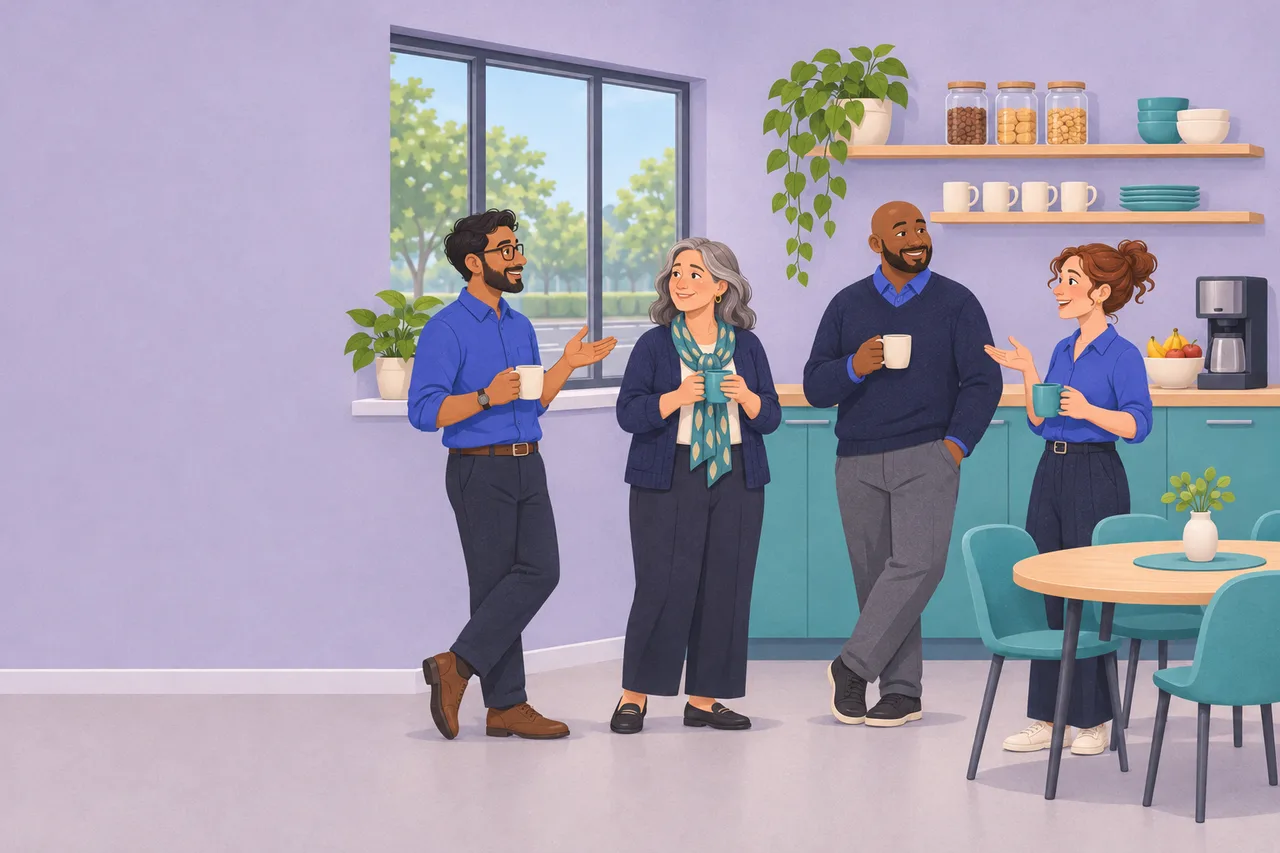
In a bright office kitchen, four colleagues chat over coffee, relaxed and friendly

Preventing sexual harassment at work: recognise it, stop it, report it

What sexual harassment is

In a 2020 government survey, 29% of people in work had experienced some form of sexual harassment at work in the previous 12 months. Knowing what counts is the first step to stopping it.

Five colleagues talk calmly in an office: on the left, two people face each other holding mugs; on the right, a wheelchair user and two colleagues talk together

Before you start. This course describes examples of harassment, without graphic detail. If it brings up anything for you, support is available: [Your organisation: support available, e.g. employee assistance]

Awareness only. This course is awareness, not a qualification, and it isn't legal advice. It has not been reviewed by a professional body, and it doesn't replace your organisation's policy or advice on your own situation.

What the law says

In England, Wales and Scotland, the Equality Act 2010 says sexual harassment is unwanted conduct of a sexual nature that has the purpose or effect of violating someone's dignity, or of creating an intimidating, hostile, degrading, humiliating or offensive environment for them. It is one of three types of harassment the Act makes unlawful. Northern Ireland has its own law, covered in the next lesson.

Sexual harassment

Harassment related to sex

Treated worse for rejecting or submitting

Unwanted, whatever was meant

You don't have to say you object for conduct to be unwanted. It can be a one-off or a pattern, in person or online, and from someone of the same or a different sex. What's invited, mutual or consensual isn't harassment, but conduct welcomed in the past can become unwanted.

It doesn't have to be intended. If it wasn't, the law looks at how the person saw it, the other circumstances, and whether it's reasonable for the conduct to have that effect.

It can be harassment even if nobody meant it that way: the law looks at purpose or effect.

Not only in the office

"At work" reaches beyond the workplace. It can include working from home or offsite, a training course or conference, and work socials closely connected with work, such as drinks straight after work or an organised leaving party.

All three types are unlawful. Sort each example into the type it best shows. If she's treated worse after saying no, choose "Treated worse for rejecting it".

0 of 9 sorted

"It was just banter." Acas: "What some people might consider as joking, 'banter' or part of their workplace culture can still be sexual harassment."

Sources: Equality Act 2010, section 26 (legislation.gov.uk, revised text to 30 October 2026, read 21 November 2026); EHRC, Sexual harassment and harassment at work: technical guidance (updated 30 October 2026); Acas, Sexual harassment (updated 30 October 2026); Government Equalities Office, 2020 Sexual Harassment Survey (July 2021; the results are labelled experimental).

These are awareness courses. They are not legal advice, they are not accredited and they have not been reviewed by a professional body. They don't replace practical training or your organisation's own risk assessment and policies.

Sources

About this course

Length
25 min
Lessons
5
Language
English
Law covered
Great Britain (Equality Act 2010 as amended by the Worker Protection Act 2023 and the Employment Rights Act 2025); Northern Ireland differences noted (Sex Discrimination (NI) Order 1976)
Last reviewed
21 November 2026
Next review
21 November 2027
Version
1

Common questions

Is this course really free?

Yes. Start a free 14-day trial and the course is in your portal straight away, branded to you, with no card needed. Every paid plan includes it at no extra cost.

Can I add this course to my own LMS?

Yes. Export it as a SCORM 1.2 or SCORM 2004 package and upload it to any LMS that supports SCORM. A free trial includes one SCORM export.

Can I add our own policies and contacts?

Yes. The course marks where to add your organisation's details, and the copy in your portal is yours to edit.

Is this course accredited?

No. It is awareness training. It is not accredited or CPD-certified and has not been reviewed by a professional body.

More free courses

People & HR

Equality, Diversity and Inclusion

A free awareness course for everyone at work in Great Britain: the nine protected characteristics, direct and indirect discrimination, harassment and victimisation, reasonable adjustments and positive action, and what you and your employer must do, including the duties in force since 30 October 2026. Northern Ireland differences noted.

25 min · 5 lessons · United Kingdom

Reviewed 21 November 2026

People & HR

Managing Volunteers Well

Volunteer management essentials for coordinators and managers: keeping a volunteer a volunteer, expenses, criminal record checks across the UK, looking after volunteers, and handling problems fairly.

25 min · 5 lessons · United Kingdom

Reviewed 22 November 2026

People & HR

Safeguarding Awareness

Free safeguarding awareness for staff and volunteers in UK charities and membership bodies. Covers children and adults at risk in England, Wales, Scotland and Northern Ireland: the main kinds of abuse and neglect, how to respond if someone tells you, sharing concerns safely, and raising a concern about a colleague.

30 min · 5 lessons · United Kingdom

Reviewed 21 November 2026

Give your team a portal with these courses already in it

Start a free 14-day trial, choose your courses and invite your learners in minutes.